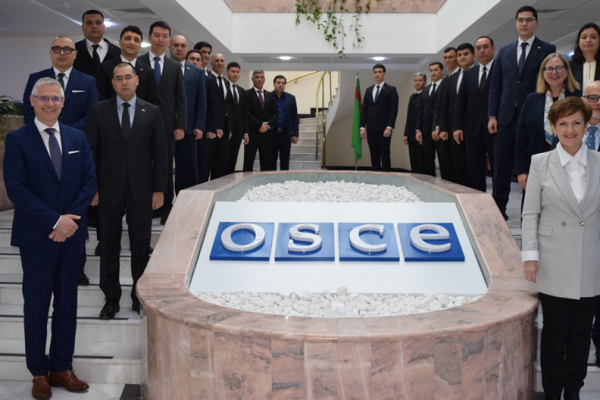
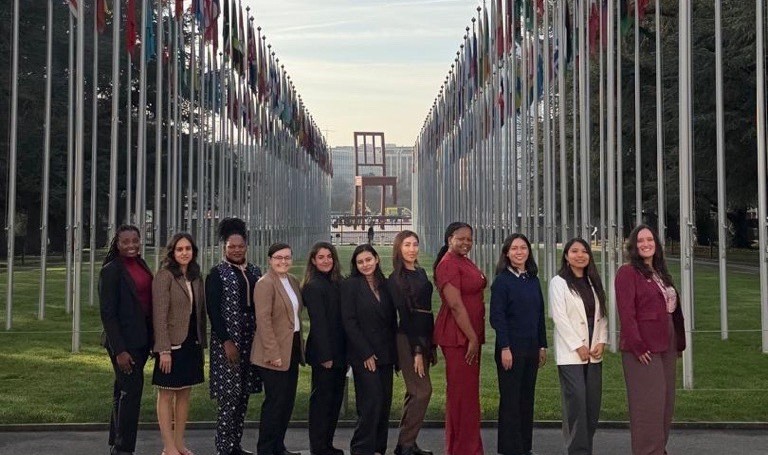
This year marks the 50th anniversary of the entry-into-force of the Biological Weapons Convention (BWC). To commemrorate the milestone, the UN Office for Disarmament Affairs’ (UNODA) Geneva Branch launched a special edition of the Youth for Biosecurity Initative to engage a group of ten young women scientists from the Global South on topics related to the BWC. The programme included online webinars and an immersive in-person study visit in December 2025. It was made possible with financial support from the European Union.
Selected participants began their journeys with a series of four substantive webinars conducted weekly in November 2025. Each webinar explored a topic related to the BWC through a gender lens, including an introductory webinar on the Convention, the impact of gender integration into approaches, science diplomacy, and tools for developing leadership and confidence.
The webinars also included a dedicated segment for representatives to share their experiences as women working in biosecurity with a spotlight on different capacities, ranging from the diplomatic field, academia, advocacy and practitioners supporting national implementation. In total, 19 speakers provided presentations and briefings to the Young Women for Biosecurity Fellows across the online workshops.
Izumi Nakamitsu, the High Representative for Disarmament Affairs joined Ambassador Cervone d’Urso, Deputy Head of the European Union Delegation and Ambassador Meyer, Chair of the BWC Working Group on the Strengthening of the Convention and Permanent Representative of Brazil to the Conference on Disarmament, to congratulate the Young Women for Biosecurity Fellows in the inaugural webinar. She encouraged the Fellows to transform their dedication to biosecurity into action with their communities and personal networks.
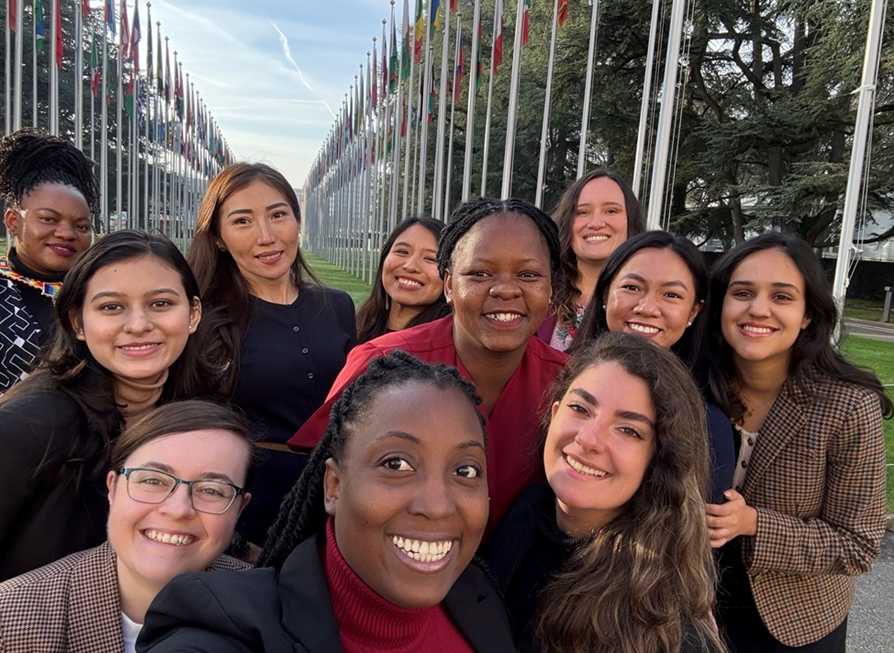
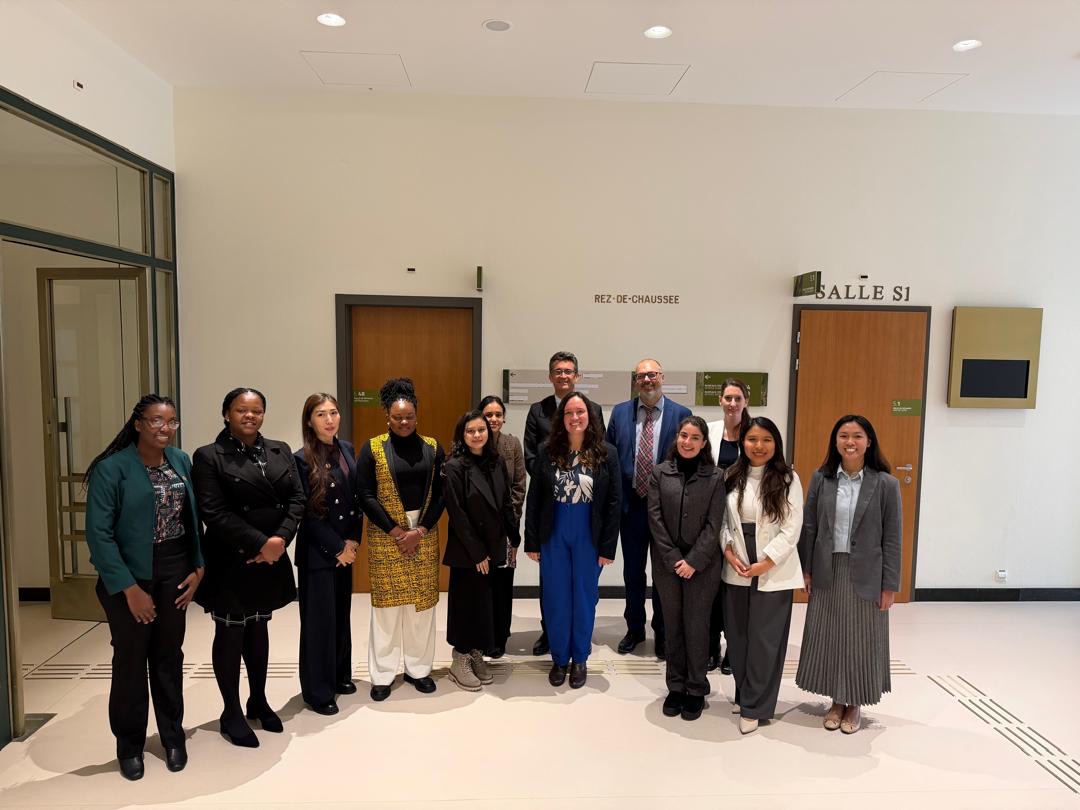
From 8 to 12 December, the cohort travelled to Geneva to attend the Seventh Session of the Working Group on the Strengthening of the BWC, as well as attend briefings and exchanges with representatives from related organisations. The group connected with a group of ten participants from the Nuclear Threat Initiative’s (NTI) Next Generation for Biosecurity Delegation, bringing together the youth cohorts in a collective networking and learning experience. In small groups, the participants came together to publish an outcome document on youth reflections and priorities for the BWC, providing an update report on previous youth-led proposals and an action plan containing recommendations to turn them into a reality.
Briefings were held with a range of stakeholders to explore several topics:
- Recent programmes conducted by non-governmental organizations: Johns Hopkins Center for Health Security, Nuo Bioscience, Operation Outbreak.
- Nuances of the One Health Approach: the Food and Agriculture Organization of the United Nations (FAO), World Health Organization (WHO), World Organization for Animal Health (WOAH).
- Research and academia: United Nations Institute for Disarmament Research (UNIDIR) and the International Biosecurity and Biosafety Initiative for Science (IBBIS).
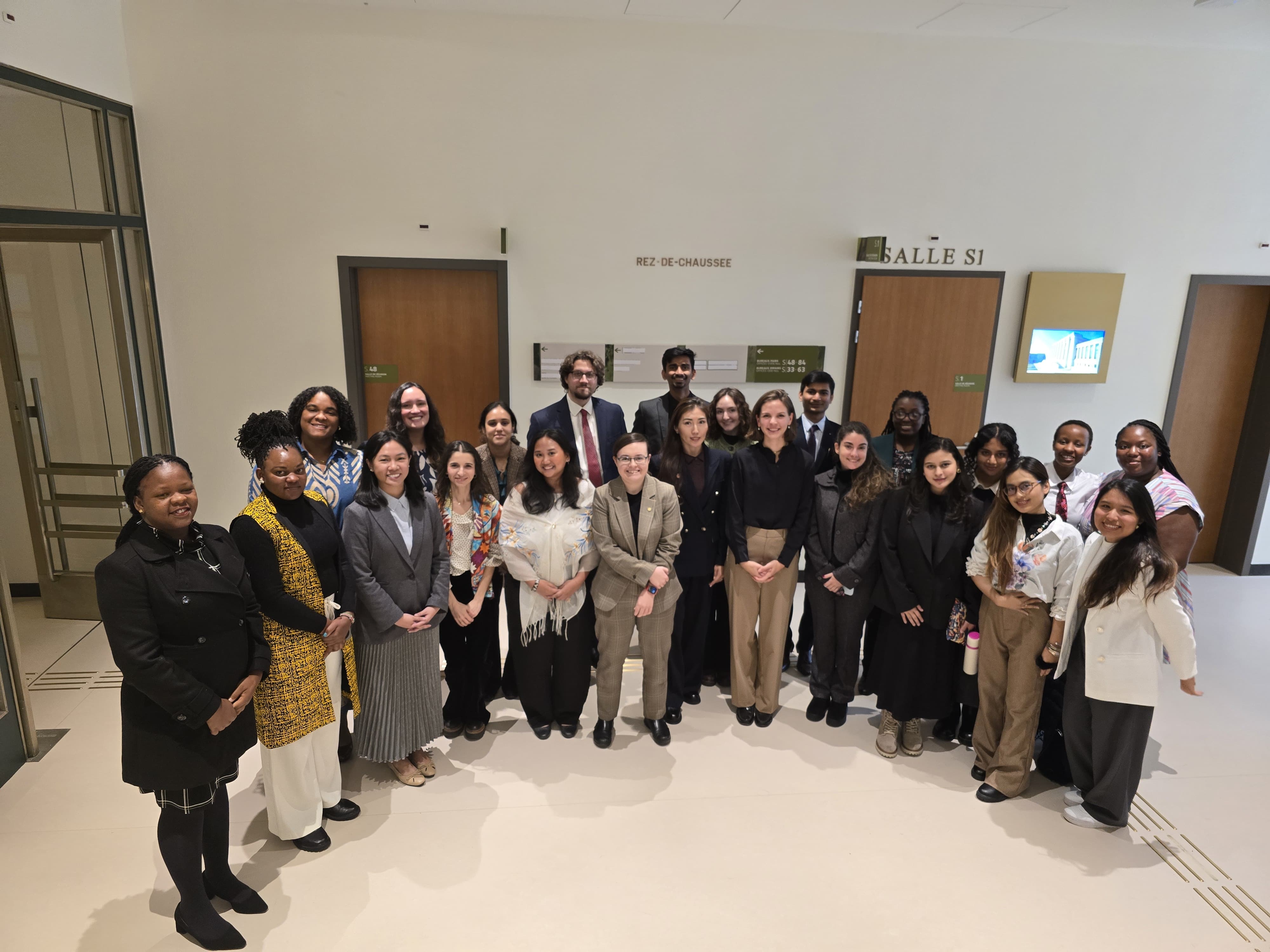
The Young Women for Biosecurity Fellows shared their perspectives and ideas with Mélanie Régimbal, Chief of UNODA’s Geneva Branch, exchanging their priorities for youth engagement in disarmament and opportunities for career growth. The participants also met with Ambassador Cervone d’Urso, Deputy Head of the Delegation of the EU to the UN and other international organizations in Geneva, and Igor Kucer, Counsellor in the Political Section for Disarmament and Non-Proliferation with the EU Delegation, to share about their experience of the programme and avenues for the training to be applied in their home countries and professional spheres.
A dedicated panel discussion with distinguished women working in biosecurity provided insights on the choices taken by women professionals on safeguarding a healthy work-life balance, navigating workplace dynamics and building a successful career in a male-dominated field. Guidance from ‘speaking even with a shaky voice’ and examples from their professional journeys were shared to help guide the young leaders in their own careers.
Panelists included Clarissa Rios Rojas, Political Affairs Officer, Biological Weapons Convention Implementation Support Unit, Somsanouk Keobounsan, First Secretary (Disarmament, Non-Proliferation and Humanitarian Affairs), Permanent Mission of the Lao PDR to the United Nations Office and other International Organizations in Geneva, Mely Caballero Anthony, Head of the Centre for Non-Traditional Security Studies with Rajaratnam School of International Studies, and Lebogang Phihlela, Deputy Director with the Non-Proliferation Secretariat in the South African Council for the Non-Proliferation of Weapons of Mass Destruction.
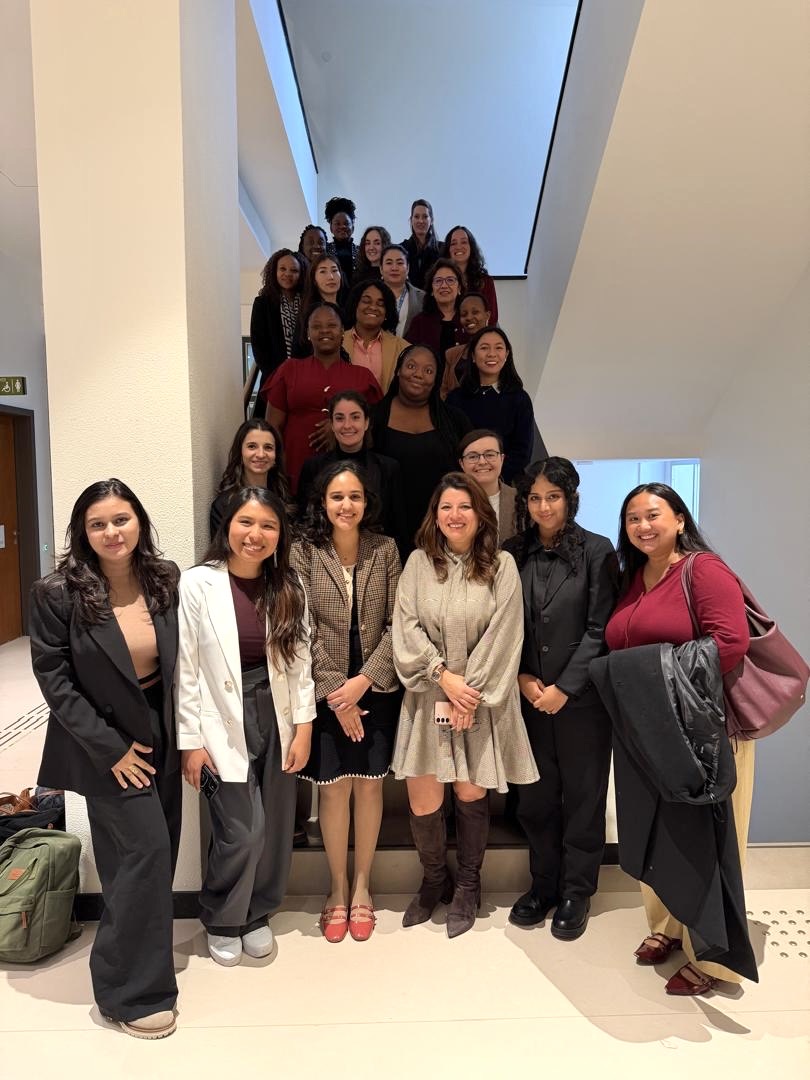
Liz Romero, one of the Young Women for Biosecurity Fellows, shared her experiences of the programme in a side-event co-organised by UNODA and NTI on the impact of diverse and inclusive engagement efforts in strengthening the BWC. Shreyash Borkar, Sriram Kumar, and Kaitlyn Connors, presented their winning entry for the Next Generation for Biosecurity Competition during the event, which highlighted young voices as essential for addressing emerging trends and issues within the biosecurity field.
Overall, the Young Women for Biosecurity Fellowship programme reflected the advances in diverse and inclusive engagement during the 50th year of the BWC, where expertise from all backgrounds can be engaged in efforts to ensure the Convention remains fit for purpose in the 21st century.