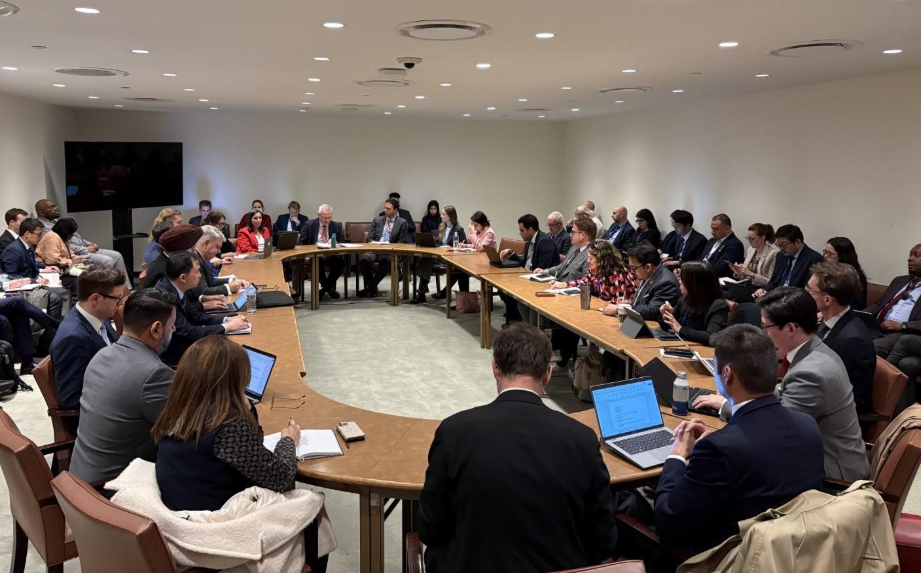
On 23 October, the Kingdom of the Netherlands held a side-event on the margins of the United Nations General Assembly First Committee to present the ongoing work undertaken by the Group of Governmental Experts on Lethal Autonomous Weapons Systems (GGE LAWS) within the framework of the Convention on Certain Conventional Weapons (CCW).
During this side-event, the Chair of the GGE LAWS, Ambassador Robert in den Bosch of the Kingdom of the Netherlands briefed participants on the Group’s efforts to address the growing international concerns around the ethical, legal and humanitarian challenges raised by LAWS.
Over the past decades, the international community has grown increasingly concerned about the implications posed by the potential development and use of LAWS. That is why the GGE LAWS was established by High Contracting Parties to the CCW in 2016. Since then, it has been meeting at least twice each year and has already made tangible progress.
Since 2023, the Group has been mandated to formulate, by consensus, a set of elements of an instrument – without prejudging its nature – and other measures to address LAWS. In his introductory remarks to the side-event, the Chair presented the work undertaken by the Group during its 2025 formal sessions to respond to this mandate. To advance the concrete work on a set of elements for an instrument, the Chair produced a “rolling text”, which is based on previous work of the Group. The Chair underlined that throughout the work of the Group, he observed genuine efforts from States with differing views to bridge differences and engage constructively in the substantive discussions on the rolling text.
The current rolling text covers elements related to a working characterization of LAWS, application of international humanitarian law (IHL) to LAWS, prohibitions and restrictions, accountability and responsibility, and risk mitigation measures. Through constructive technical dialogue, the shared understanding among States has grown on several key principles, such as the applicability of IHL to LAWS and the fundamental notion that human accountability cannot be delegated to machines. Nonetheless, divergences remain, particularly regarding the scope of prohibitions and legal and/or political regulatory measures.
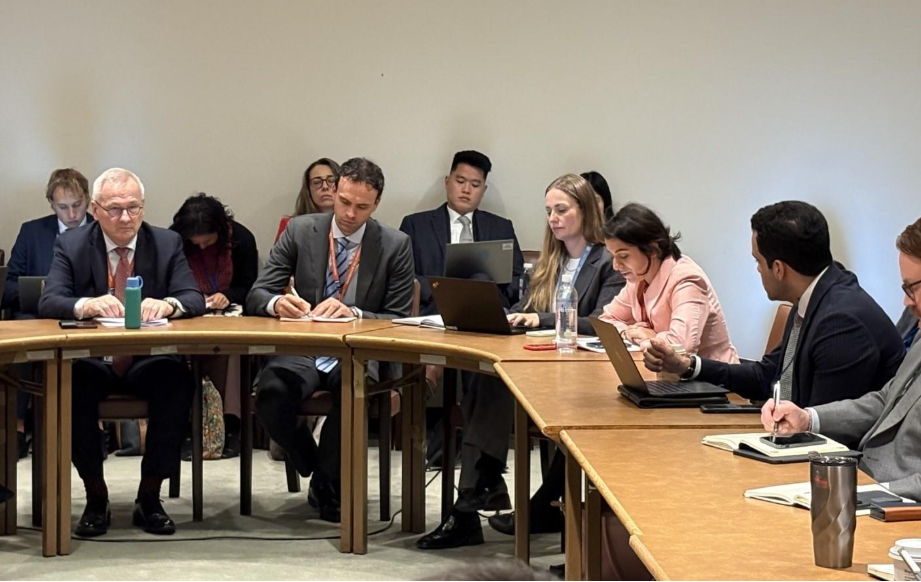
Some participants recognized and welcomed the Group’s progress made towards a legally binding instrument to regulate autonomous weapons systems and ensure meaningful human control, which is a priority for many States. Moreover, several representatives of States reiterated their support to the work of the Group through the discussions on the “rolling text’.
During the exchange with participants, several delegates recalled and echoed the joint call issued two years ago by the President of the ICRC and the Secretary General, urging the conclusion of negotiations on a new legally binding instrument to establish clear prohibitions and restrictions on autonomous weapon systems by the end of 2026.
In accordance with its mandate, the Group is expected to submit a final report to the Seventh Review Conference of the CCW, scheduled for November 2026.
With only two formal sessions remaining before the Seventh Review Conference, the Chair intends to circulate a new version of the “rolling text”, and to continue substantial exchanges with interested delegations to reach consensus.
In his concluding remarks, the Chair underscored that the decisions taken within the Group will play a pivotal role in shaping how the international community responds to the challenges posed by LAWS. As technological advancements accelerate, all States—whether or not they are parties to the CCW—are encouraged to engage actively in shaping the framework for LAWS, ensuring that it remains inclusive, balanced, and reflective of the diverse perspectives of the international community. The Chair invited representatives to take part in the next formal sessions of the Group, which will take place in Geneva, respectively in March and August-September 2026.