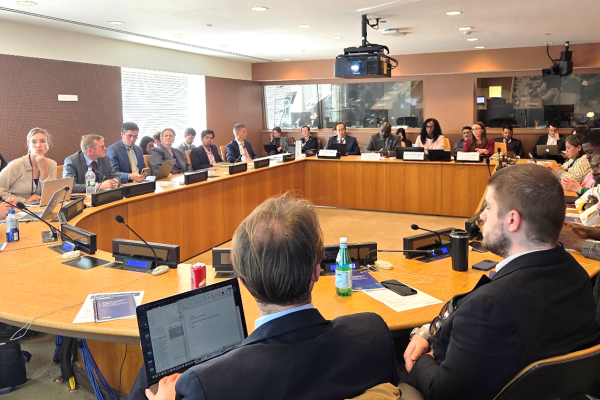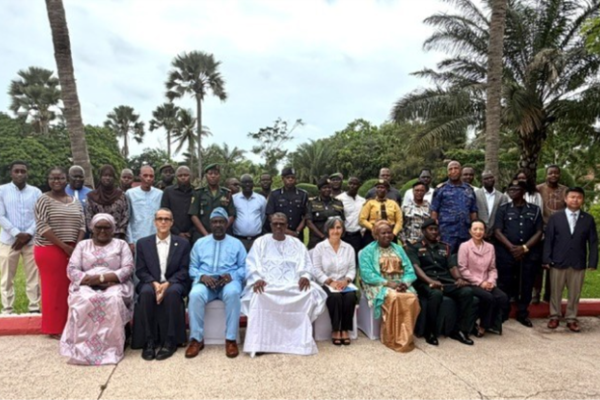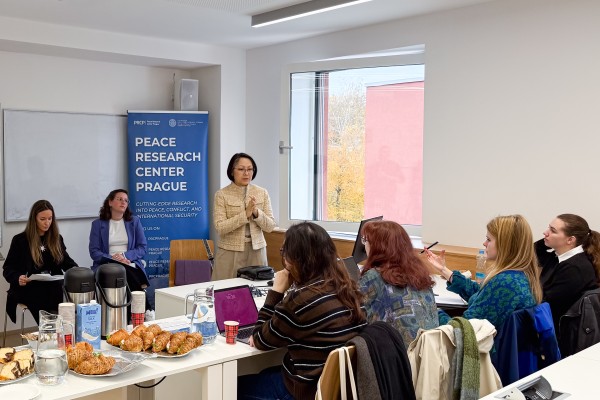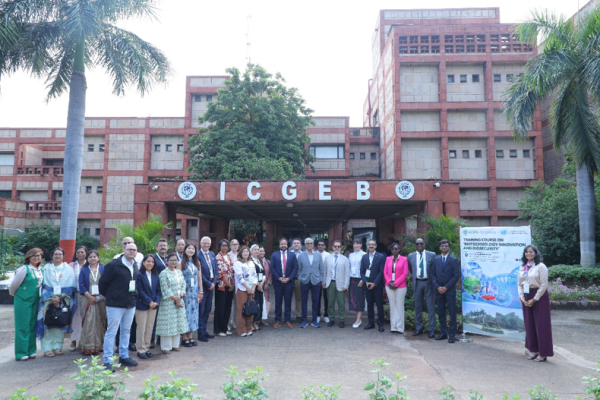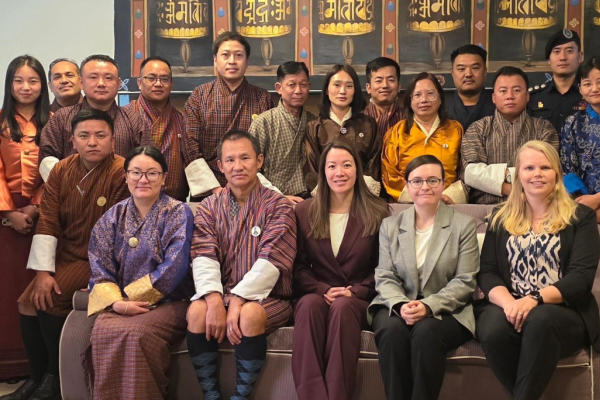

From 19 to 20 October 2026, 24 representatives from Bhutan participated in a workshop on establishing a National Registry of Controlled Biological Agents (NRCB), organized by the UN Office for Disarmament Affairs (UNODA) in collaboration with the Ministry of Foreign Affairs of Bhutan and the Royal Center for Disease Control in Bhutan. Following a workshop held in July 2026, participants came together once more to finalize a list of priority pathogens of concern and to officially receive the software to establish a NRCB.
With generous financial support from the European Union, the workshop engaged national representatives in discussions and scenario-based learning on steps to establish a NRCB, with technical facilitation provided by two experts from the Biosecurity Office of the National Institute for Public Health and the Environment (RIVM) of the Netherlands.
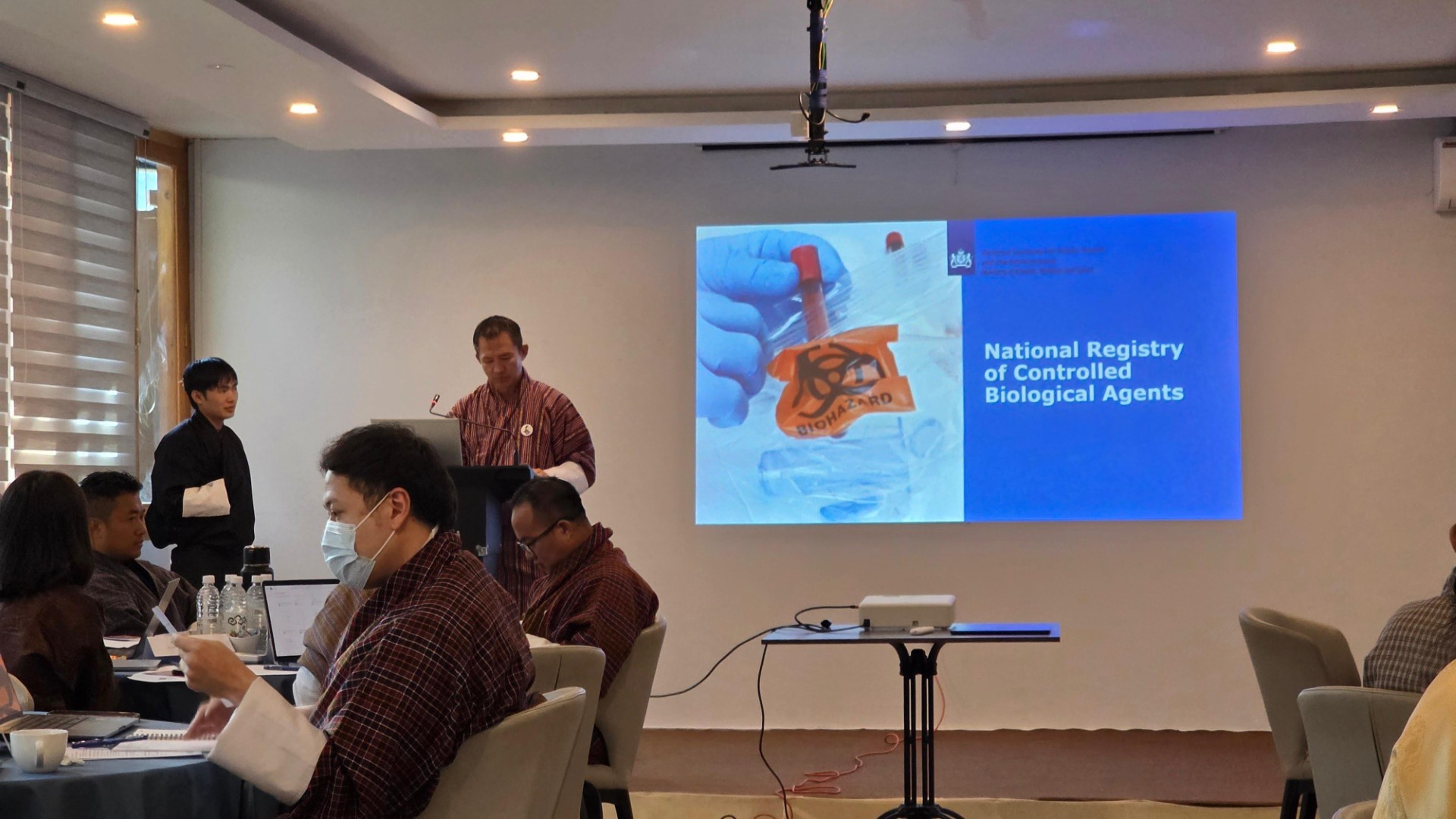
In opening remarks to the workshop, Mr. Jigme Tenzin, Chief of the Political and International Security Division with the MFA of Bhutan, noted the event as an opportunity to build upon previous understanding of the software to installation, particularly with participating stakeholders to discuss institutional responsibilities. He also highlighted the establishment of a NRCB as an important step to ensure the safe and secure handling of pathogens, which would be essential in strengthening national efforts for biosecurity and biosafety. Ms. Marykate Monaghan, Associate Political Affairs Officer with UNODA, also delivered opening remarks, commending Bhutan’s engagement in activities related to strengthening the implementation of the Biological Weapons Convention (BWC). Throughout 2026, seven national experts have been involved in a range of training programmes provided by the BWC Implementation Support Unit (ISU) under Article X.
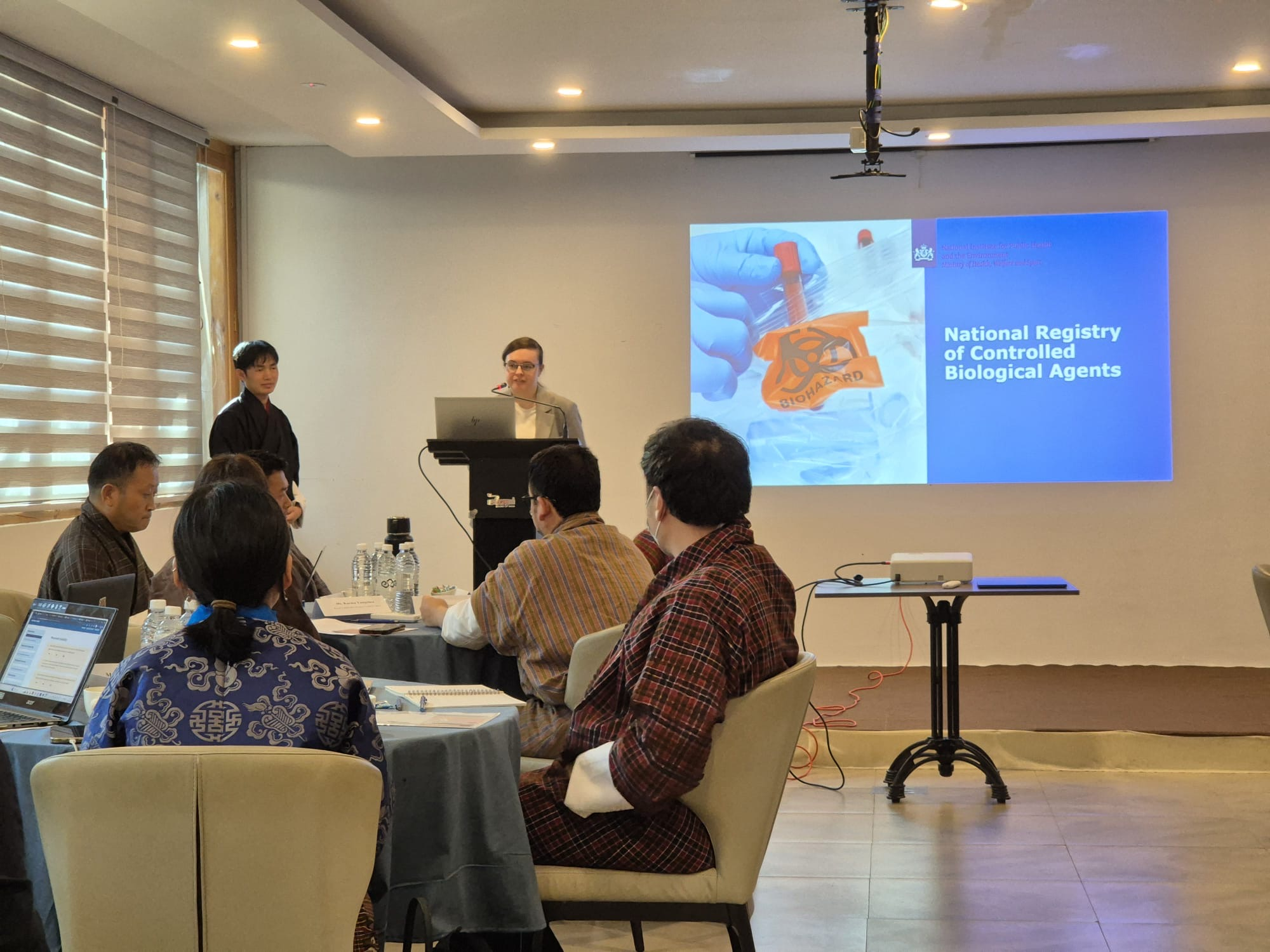
Ms. Monaghan also provided an introductory presentation on Confidence-Building Measures (CBM) related to the BWC, with insights on the forms to be completed and the evolution of the CBM process. Participants then heard an update on Bhutan’s actions since the first workshop in July, with Mr. Kesang Wangchuk of the Royal Center for Disease Control sharing that a prioritized list of pathogens has been developed by relevant stakeholders. Ms. Ngoc Hoa Chung, RIVM, shared a presentation on emerging biotechnology risks, before facilitating an interactive assessment of potential dual-use implications through scenario-based exercises.
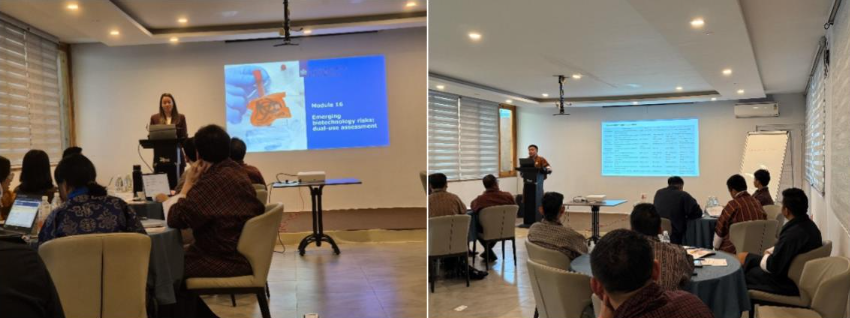
On the second day, participants engaged in an interactive risk assessment exercise facilitated by Ms. Iris Vennis, RIVM, to simulate potential risks and mitigation measures related to cybersecurity as related to the database, storage, and data collection. Presentations on the technical implementation aspect of the database, as well as ways of implementation, maintenance and continuation, were provided to prepare participants for establishing a NRCB. As a result, the handover of the NRCB software with guidance documents to the Royal Center for Disease Control in Bhutan was completed.
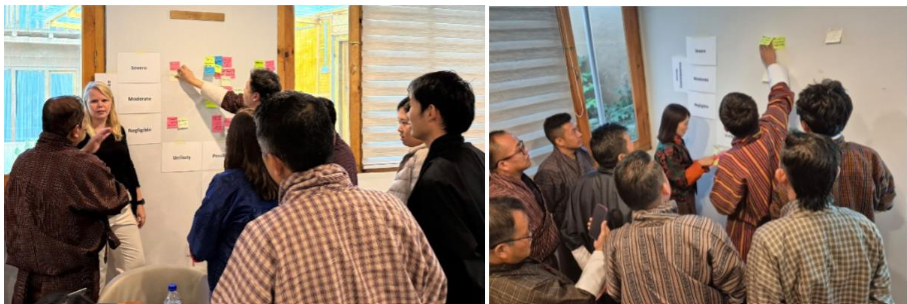
The workshop assisted with establishing a NRCB, supported the finalization of a national list of prioritized pathogens of concern, and strengthened communication and knowledge-sharing between representatives of different agencies. UNODA will continue to support national and regional initiatives to promote the effective implementation of the BWC and capacity-building efforts in Asia.
Further information on the BWC is available here.